

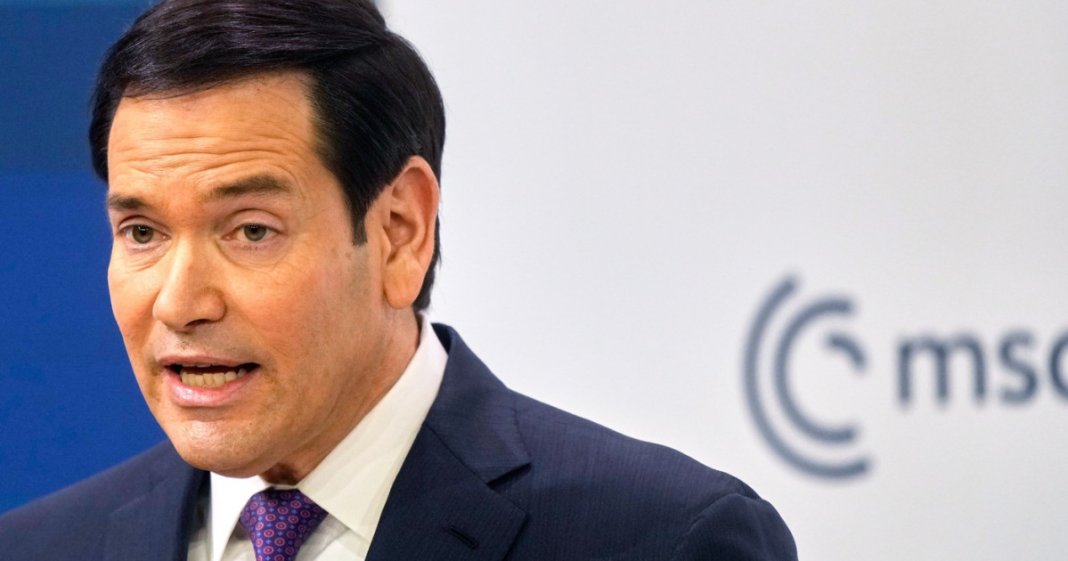
Influence of the Decision on Transatlantic Relations
Marco Rubio’s choice to address certain sensitive topics at the Munich Security Conference has sparked intense discussions regarding the future of transatlantic relations. European leaders have voiced their concerns about the potential consequences for cooperation between the United States and Europe, particularly in the context of rising geopolitical tensions. This decision is seen by some as a signal of a shift in U.S. foreign policy that could impact long-term stability and collaboration. While some American officials argue that such discussions are necessary to tackle global issues, European allies fear that an overly direct and unilateral approach could undermine joint efforts to find diplomatic solutions. Therefore, it is crucial that the transatlantic dialogue remains open and constructive to ensure a solid and effective partnership in the face of international challenges.
European Leaders’ Reactions
European leaders responded with caution and skepticism to Marco Rubio’s statements, reflecting widespread concern about the possible implications for the transatlantic alliance. Some leaders expressed worries that Rubio’s positions could lead to a distancing between the United States and its European partners. The German Chancellor emphasized the importance of maintaining an open dialogue and close collaboration to address common challenges, highlighting that unity and cooperation are essential in an increasingly complex geopolitical landscape. The French President stressed the need for Europe to bolster its own defense capabilities and make its strategic interests clearer, while the Italian Prime Minister called for prudence and avoidance of measures that could escalate tensions. At the same time, other European leaders viewed Rubio’s speech as an opportunity to reaffirm their joint commitment to global security, underscoring the need for coordinated and common solutions. These varied reactions illustrate the complexity of U.S.-European relations and the need to navigate carefully amid often divergent interests and priorities.
Implications for Global Security Policy
Marco Rubio’s decision to tackle controversial subjects at the Munich Security Conference has significant implications for global security policy. In an international context marked by instability and emerging challenges, any shift in the transatlantic dynamic may have major repercussions on global peacekeeping and security efforts. Some analysts warn that a more assertive and less coordinated foreign policy from the U.S. could complicate international crisis management. There is also a risk that traditional alliances may be tested, with both state and non-state actors recalibrating their strategies in light of new geopolitical realities.
In this context, European leaders face the challenge of adjusting their security policies to respond to these new circumstances. Cooperation in intelligence sharing, cybersecurity, and responses to transnational threats is becoming more crucial than ever. Additionally, it is vital for transatlantic partners to coordinate their efforts in addressing common challenges, such as terrorism, the proliferation of weapons of mass destruction, and climate change, which require globally coordinated solutions. In this regard, dialogue and cooperation remain essential to ensure an international order based on rules and to prevent conflict escalation.
Future of U.S.-EU Collaboration
Amid recent developments, the future of collaboration between the U.S. and the European Union is looked upon with interest, coupled with a certain degree of uncertainty. Despite some tensions and differences of opinion, both sides acknowledge the importance of a strong strategic relationship that supports international stability and security. The United States and the European Union have a long history of cooperation in various fields, from security and defense to trade and cultural exchanges. Nonetheless, current challenges necessitate a reassessment of common priorities and methods of collaboration.
An essential aspect of future collaboration is adapting to new geopolitical and economic realities. As the world becomes increasingly interconnected and complex, the U.S. and the EU must find new ways to synchronize their efforts to address global challenges. In this sense, there is a clear need to strengthen political dialogue and develop effective coordination mechanisms that allow for rapid and coherent responses to emerging crises.
Moreover, another key element is enhancing cooperation in technology and innovation. In a digital age where technology advances rapidly and plays a central role in both economy and security, the transatlantic partnership must focus on promoting research and development, protecting critical infrastructure, and ensuring a safe and trustworthy digital environment.
Lastly, U.S.-EU collaboration must be grounded in shared values and principles such as democracy, the rule of law, and respect for human rights. These foundations are essential for building a relationship of trust and promoting a rules-based international order. In conclusion, while significant challenges exist, the future of collaboration remains pivotal.
Sursa articol / foto: https://news.google.com/home?hl=ro&gl=RO&ceid=RO%3Aro